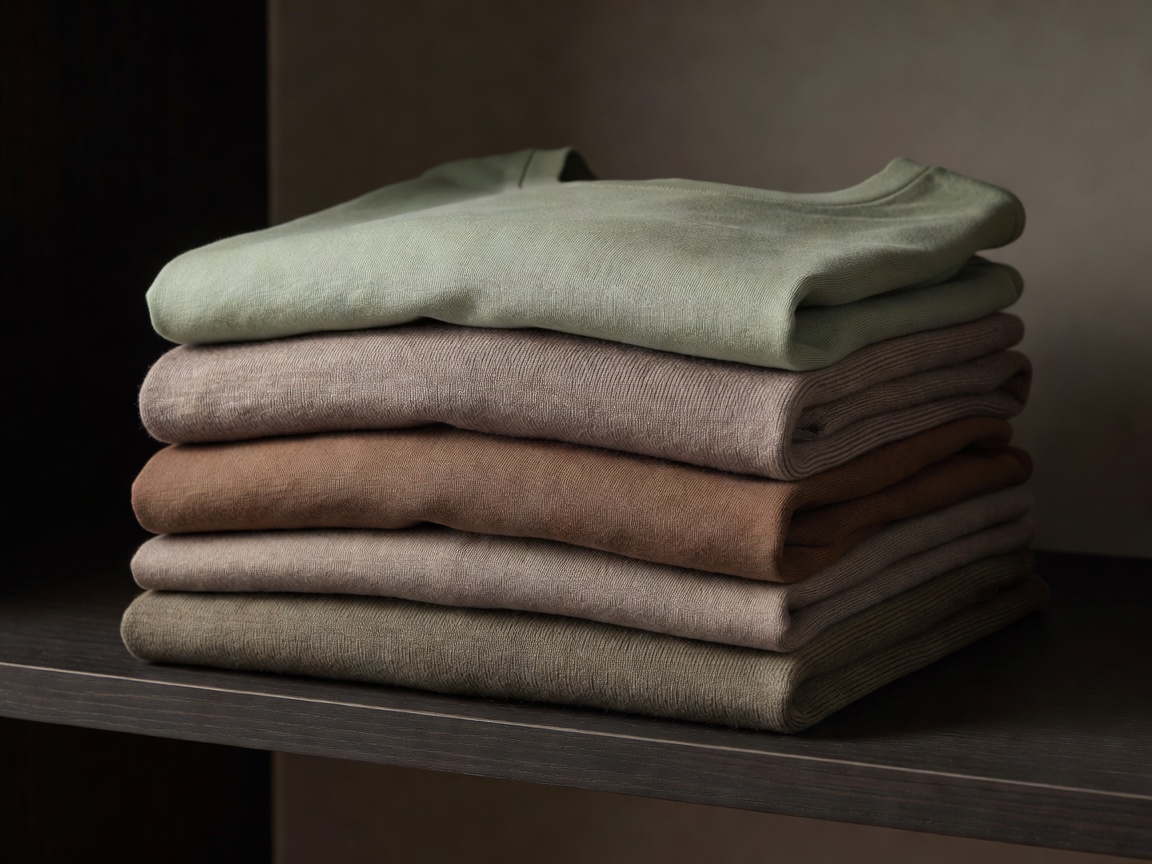
An old idea with practical roots
The phrase “capsule wardrobe” is usually credited to Susie Faux, who ran a London boutique called Wardrobe in the 1970s and encouraged clients to build around a few lasting essentials. In 1985 designer Donna Karan presented her “Seven Easy Pieces,” a compact set of interchangeable garments for working women. More recently, Courtney Carver’s Project 333, started in 2010, invited people to dress with 33 items for three months. You need not follow any of these strictly. What they share is useful: fewer decisions, more combinations, and clothes chosen for how they work together rather than how they look alone.
There is also a quieter reason to wear what you own more often. The Ellen MacArthur Foundation’s 2017 report A New Textiles Economy found that the number of times a garment is worn before it stops being used had fallen by about 36 percent over fifteen years. Wearing a comfortable piece again is not a failure of imagination; it is good value.
Step one: find your anchors
Look back at the garments you reach for most. Usually two or three colours dominate — perhaps charcoal, olive and ecru, or black, stone and rust. These are your anchors. Pieces in anchor colours combine freely, so most of your rotation should sit there. One or two accent colours, worn in smaller doses, keep things from feeling flat.
Texture matters as much as colour. A matte cotton tee, a ribbed knit and a brushed twill trouser in similar tones look intentional together because the surfaces differ. Three smooth, shiny pieces in the same shade can look accidental.
Step two: layer for the whole day
Comfort changes between a cold morning, a heated office and a warm afternoon. Think in three layers: a breathable base against skin, a middle layer for warmth, and an outer layer that comes off easily. Each layer should look complete on its own so that removing one never leaves you underdressed.