Guide 04 · Care

A Gentler Laundry Routine

The favourite tee that shrank an inch. The knit that grew pills at the elbows. The black trousers fading to grey. Much of what makes clothes uncomfortable over time happens in the wash.

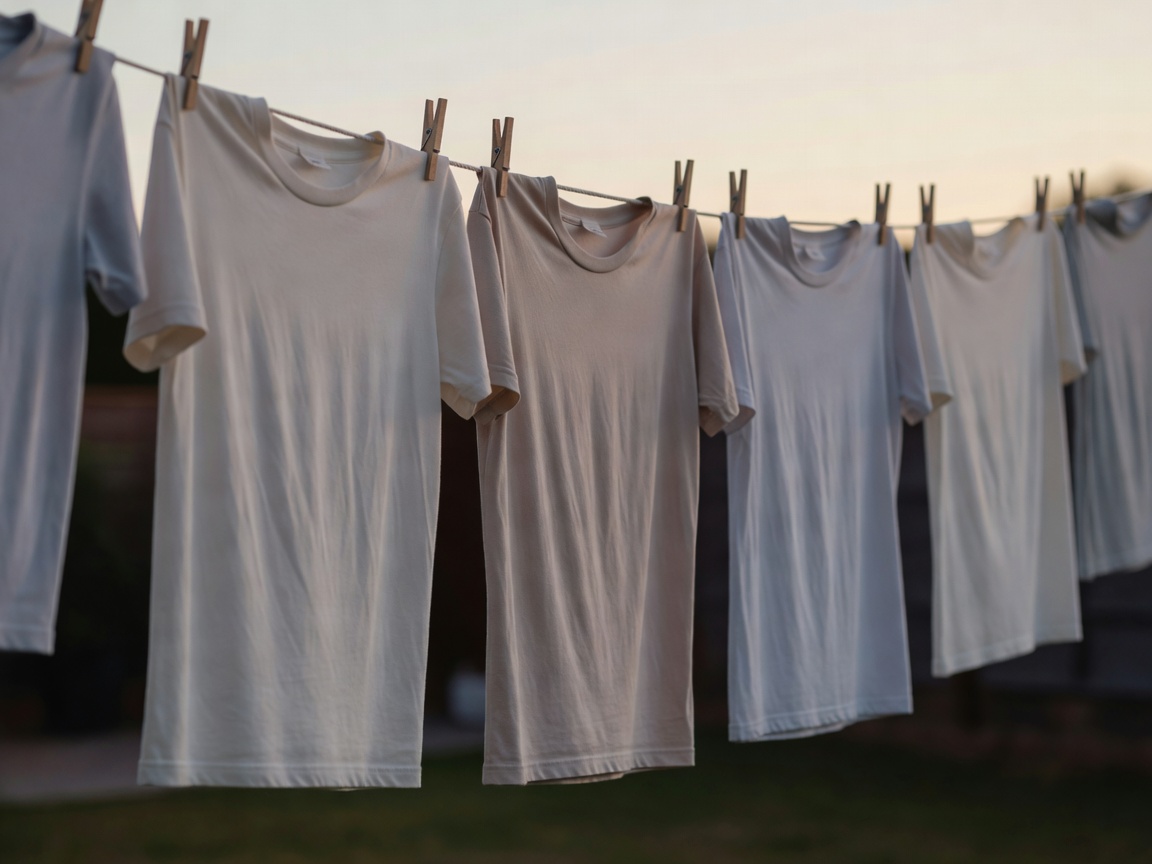
Plain cotton t-shirts drying on a washing line in soft evening shadow

Read the label before the first wash

Care labels exist because rules require them in many places. In the United States, the Federal Trade Commission’s Care Labeling Rule, first adopted in 1971, requires most garments to carry instructions for regular care. Internationally, the symbols most people recognise — a washtub, a triangle, a square, an iron and a circle — are standardised in ISO 3758, built on the system developed by GINETEX, the international association for textile care labelling. The tub covers washing, the triangle bleaching, the square drying, the iron ironing and the circle professional cleaning. Dots indicate temperature; bars beneath a symbol ask for gentler handling; a cross means do not.

Labels state the maximum safe treatment, not the ideal one. A garment marked 40°C will usually be fine, and often happier, at 30°C.

Wash less, wash cooler

Many everyday clothes are washed more often than they need. Jeans, knits and outer layers can usually be aired between wears; underwear and base layers are the exception. When you do wash, cooler cycles reduce shrinkage, colour loss and wear on elastic. Modern detergents are formulated to work well at low temperatures. In the United Kingdom, WRAP’s Love Your Clothes campaign has long encouraged washing at 30°C and air drying to extend garment life.

Turn garments inside out to protect the visible surface from abrasion and fading. Close zips and fasten hooks so they do not snag knits. Do not overload the drum: clothes need room to move through water, and crowding causes more friction.

A routine by garment

  • Cotton tees

    Wash inside out at 30°C with similar colours. Reshape while damp and hang on a wide hanger or line. Skip high dryer heat, the main cause of shrinkage.

  • Denim and chinos

    Wash infrequently and inside out in cold water. Hang to dry to protect elastane. Spot-clean small marks instead of running a full cycle.

  • Merino and fine knits

    Use a wool or delicate cycle with wool detergent, or hand wash. Press water out in a towel and dry flat; hanging stretches the length.

  • Linen

    Wash warm or cool, line dry and iron while slightly damp if you want a crisper look. Creases are part of linen’s character.

  • Lyocell and modal

    Cool, gentle washes and low heat. These fibres are weaker when wet, so avoid wringing.

Pilling, and what to do about it

Pills form when short fibres work loose through friction and tangle into small balls. Textile laboratories measure resistance with methods such as the Martindale test in ISO 12945 and ISO 12947. At home, you can slow pilling by washing inside out and avoiding mixed loads with rough items like towels and denim. Remove existing pills with a fabric shaver or a sweater comb, working gently on a flat surface. Pilling is not a sign that a garment is ruined; many good knits pill early and settle.

Storage that keeps shape

Fold heavy knits rather than hanging them, which pulls shoulders out of shape. Hang woven shirts and trousers on hangers that match the shoulder width. Keep wool clean before storing it for a season, since moths are drawn to body oils and food traces. Cedar blocks and lavender sachets are traditional deterrents; regular airing and vacuuming of wardrobe corners work best.

Small mending, big difference

A loose button, a dropped hem or a small hole in a seam takes minutes to fix and adds years to a garment. Basic sewing kits are inexpensive. Some people enjoy visible mending, using contrasting thread in the tradition of Japanese sashiko stitching. Outdoor clothing company Patagonia publishes free repair guides through its Worn Wear programme, and many of the techniques apply to everyday clothes. For alterations at the waist, hem or sleeves, a local tailor is often the most comfortable investment you can make in what you already own.

Back to the start: Comfort at First Touch →